
Hair Crimper for Editorial 2026: Photo Shoot Guide

Hair Crimper for Photoshoots 2026: Editorial Crimp Styles
In This Guide
- Why Crimpers Work for Photography
- 5-Step Editorial Crimp Method
- Photography Temperature Settings
- Tool Setup for Shoots
- Pro Tips for the Camera
- FAQs
Why Crimpers Work Better Than Curlers for Photoshoots
Camera lighting — whether natural sunlight, ring light, or studio strobe — exaggerates texture. Crimped hair shows a clear, deliberate pattern that reads as intentional on camera, while loose curls can look like frizz under harsh light. This is why editorial teams, content creators, and brand shoots default to crimping for textured, voluminous looks:
- Visual pattern: Crimped waves have a defined zigzag that catches light predictably, making styling easier to direct mid-shoot
- Volume illusion: The texture adds visible volume at the roots — critical for side-profile and back-of-head shots
- Hold under lights: Crimped patterns hold under the heat of studio lighting far better than curls
- Versatility: A single crimp session can be brushed out for soft waves, combed for defined zigzag, or finger-tousled for editorial mess
5-Step Editorial Crimp Method
| Step | Action | Time |
|---|---|---|
| 1 | Pre-style: wash, blow-dry with volume at roots | 10 min |
| 2 | Section: 6–8 large quadrants; clip top layers aside | 3 min |
| 3 | Crimp in 1.5-inch sections; clamp for 1.5 seconds each | 12 min |
| 4 | Cool 5 minutes; do not touch during cooling | 5 min |
| 5 | Style for camera: brush out, leave defined, or finger-tousle | 3 min |
Total pre-shoot styling: 33 minutes for shoulder-to-mid-back length hair. The 1.5-second clamp is the critical detail — under 1 second produces soft waves, over 2 seconds creates a sharp zigzag that looks dated on modern cameras.
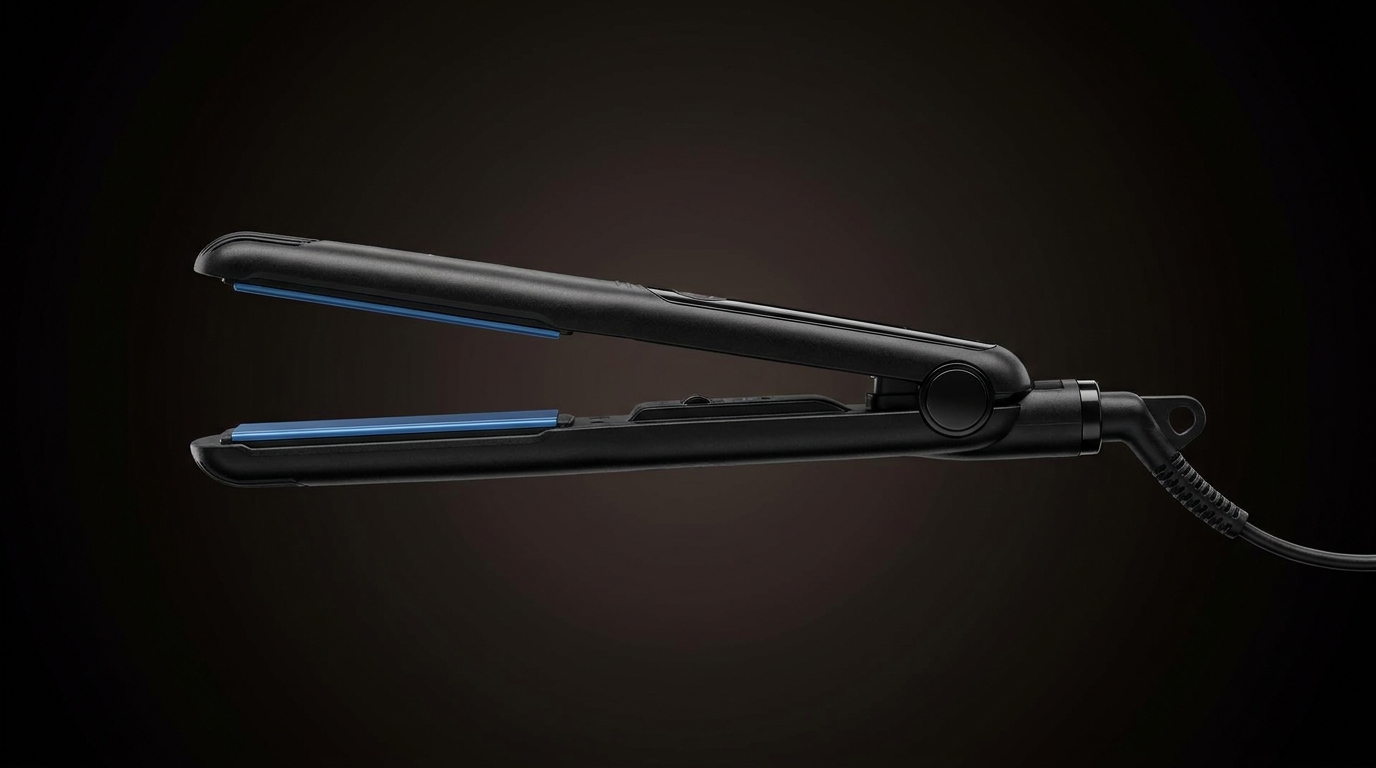
FIFN L01 Hair Crimper — 25mm wide plates and adjustable temperature up to 410°F. The workhorse tool for editorial shoots where defined, camera-ready texture is required.

FIFN M01 Hair Straightener — 25mm plates for smoothing the top layer of crimped hair on shoots where a hybrid crimp-and-sleek look is needed. Doubles as the finishing tool.

FIFN L05 Mini Crimper — 9mm plates for face-framing pieces and flyaways. Essential for editorial detail work where the focus is sharp.
Photography Temperature Settings
| Look | Temp (°F) | Temp (°C) | Hold |
|---|---|---|---|
| Soft editorial wave (brushed out) | 320–340°F | 160–170°C | 8+ hours under lights |
| Defined zigzag (vintage) | 380–410°F | 193–210°C | All-day on set |
| Volume-only (root crimp) | 300–320°F | 150–160°C | Through shoot |
| Hybrid crimp + sleek (top layer smoothed) | 350–370°F | 177–188°C | 6+ hours |
For camera work, err on the side of higher heat (380–410°F) for defined looks. The pattern needs to survive hair touch-ups, wind from fans, and 3–6 hours of styling transitions. Lower temperatures (under 350°F) work for short shoots or social media content shot in a single take.
On-Set Do's and Don'ts
| ✅ Do | ❌ Don't |
|---|---|
| Pre-style 30+ min before shoot | Crimp on set with rushed timing |
| Bring a touch-up crimper for breaks | Re-crimp the full head between shots |
| Use a light hold spray between sets | Apply heavy wax or shine serum |
| Plan looks in advance with a mood board | Wing texture decisions during the shoot |
| Photograph test shots before the main set | Trust the pattern without checking the monitor |
5 Pro Tips for Camera-Ready Crimped Hair
- Tip 1: Crimp the bottom 70% of each section, not the full length — leave the top layer slightly smooth to avoid frizz halos under studio lights (FIFN L01 setup).
- Tip 2: For a hybrid look, crimp first, then run the FIFN M01 flat iron lightly over the top layer only — gives volume with a sleek surface.
- Tip 3: Use the FIFN L05 Mini for face-framing flyaways that need precise control without disrupting the larger crimp pattern.
- Tip 4: Schedule a 5-minute "cool and set" gap between crimping and applying finishing products — premature brushing or brushing too soon flattens the pattern.
- Tip 5: Bring a backup crimper on long shoots — the L01 can run 4–6 hours of continuous use, but lithium-cell reliability varies under heavy use.
Frequently Asked Questions
Q1: What crimper do editorial photographers use most?
Answer: The 25mm plate size is the editorial standard because it produces a defined wave that reads clearly on camera. The FIFN L01 with its 25mm plates is the most-used size for both commercial and editorial work.
Q2: How long does crimped hair hold under studio lights?
Answer: At 380–410°F with a 1.5-second clamp, crimped patterns hold 6–8 hours under typical studio lighting. For longer shoots, schedule a 10-minute touch-up every 2 hours using the same tool at the same temperature.
Q3: Is crimped hair better for camera than curled hair?
Answer: For volume and texture photography, yes. Crimped hair shows a defined pattern that catches light predictably, while curls can look like frizz under harsh light. For soft, romantic looks, curls are still preferred. Editorial teams usually use both depending on the brief.
Q4: Can I crimp on the day of a photoshoot or do I need to do it earlier?
Answer: Same-day is fine. Crimp 30–60 minutes before the shoot starts, cool completely, then brush out or leave defined. Day-old crimped hair tends to lose pattern and look matted on camera.
Q5: What's the difference between editorial crimp and a 90s zigzag?
Answer: Modern editorial crimp uses 1.5-second clamps at lower temperatures (320–370°F) for a softer wave that brushes out into a beachy texture. Vintage 90s zigzag uses 2+ second clamps at 400°F+ for a sharp, defined pattern. Both have their place — pick the look that matches the brand brief.
Building a Camera-Ready Kit?
Shop FIFN Hair Crimpers →Hair Crimper for Gym 2026: Pre-Workout Styling
Hair Crimper for Gym 2026: Pre-Workout Styling
Related Posts

Cordless Hair Crimper vs Wireless Straightener: What's Different?

Can You Crimp Hair With a Flat Iron? What Works and What Doesn't

Purple Hair Crimper Buying Guide: Color, Plates & Root Volume

Hair Crimper for Men: Subtle Root Volume for Short Hair

Best Hair Crimper for Thick Hair: Plate & Heat Buying Guide

Hair Crimper Y2K 2026: Step-by-Step Throwback Tutorial

Boho Crimped Hair for Outdoor Weekends: Soft Texture Guide


