

How to Straighten Thick Hair Without Frizz: 7 Steps
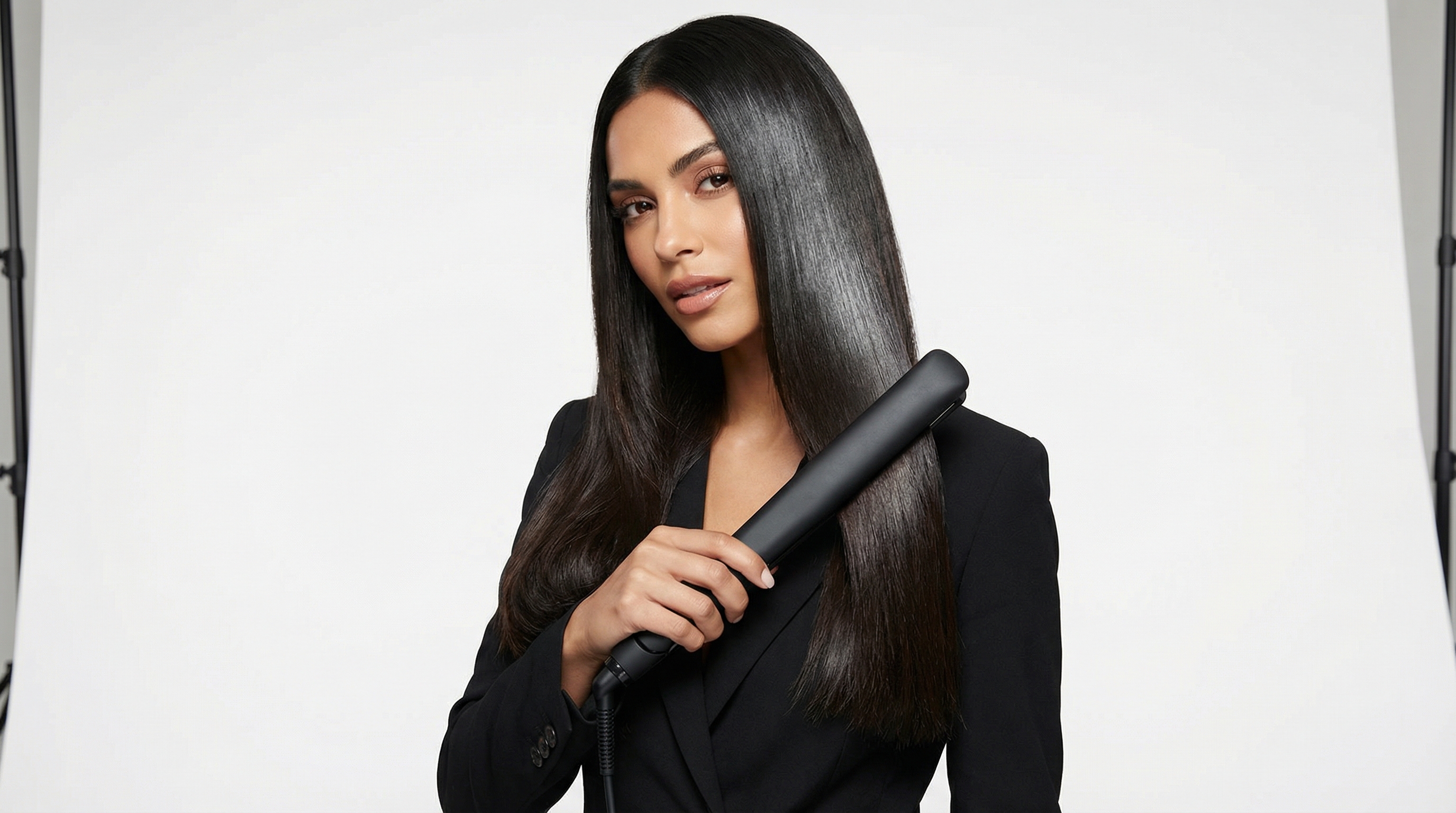
How to Straighten Thick Hair Without Frizz: 7-Step Method
⚡ AI Summary — Quick Answer
Frizzy thick hair after straightening is caused by humidity, missing prep steps, and wrong sectioning — fix all three and get mirror-smooth results that last 12+ hours.
- Use 400°F–430°F for thick hair; lower heat won't close the cuticle properly
- Section into 8–10 thin layers — thick sections trap steam and cause frizz
- One slow, steady pass beats multiple fast passes for thick hair
- Finish with anti-humidity serum immediately after straightening, before frizz sets
Why Thick Hair Goes Frizzy After Straightening

Thick hair has more cuticle layers per strand, more protein structure to reshape, and more surface area exposed to ambient humidity. When the straightening process doesn't fully close every cuticle layer, moisture from the air enters — and frizz returns within minutes.
Three specific causes account for 90% of frizz in thick hair:
- Insufficient heat — not hot enough to reshape the inner cortex of thick strands
- Sections too thick — steam from compressed hair can't escape, leaving cuticles open
- No humidity sealant — finishing without anti-humidity serum leaves cuticles exposed to moisture
Fix these three and thick hair stays straight 10–14 hours even in humid conditions.
The 7-Step Method: Thick Hair Straight Without Frizz

- Wash with smoothing shampoo — reduces natural frizz at the strand level before heat is applied
- Towel-dry gently — blot, never rub; rubbing lifts the cuticle and creates frizz before you even start
- Apply heat protectant + anti-humidity serum to damp hair — combo product or separate products, worked through from root to tip
- Blow-dry in sections with a round brush — direct airflow downward to smooth cuticles; get hair 100% dry
- Divide into 8–10 thin sections — clip upper layers up, work from nape upward, ½-inch sections per pass
- Flat iron at 410°F–430°F, one slow pass per section — 3–4 seconds per inch moving steadily; do not go over the same section more than twice
- Apply finishing serum immediately while hair is warm — 1–2 drops of argan or silicone serum seals the cuticle while it's still pliable
Thick Hair Straightening: What Works vs What Creates Frizz
| ✅ DO | ❌ DON'T |
|---|---|
| Use 410°F–430°F for thick/coarse hair | Use the same temperature as fine hair (350°F) |
| Section into thin ½-inch layers, 8–10 total | Straighten 2-inch thick chunks in one pass |
| Apply anti-humidity serum on damp AND warm hair | Skip serum and rely on hairspray alone |
| One slow, steady pass (3–4 sec/inch) | Multiple fast passes back and forth |
| Blow-dry 100% dry before flat iron | Flat iron on slightly damp "almost dry" hair |
| Work bottom-up, nape to crown | Start at the top where hair is most visible |
The Right Heat for Thick Hair (Why Low Heat Backfires)
Thick hair requires 400°F–430°F (204°C–221°C) to properly reshape its protein structure. At 350°F — the commonly recommended "safe" temperature — you're only affecting the outer cuticle layer of thick strands. The inner cortex stays unaltered, and as the outer layer cools and contracts, it creates micro-crimping that reads as frizz.
Higher temperature done once with heat protectant causes less cumulative damage than lower temperature done multiple times. One pass at 420°F beats four passes at 350°F for both smoothness and hair health.
Why FIFN?
- 🏆 Trusted by 500,000+ users worldwide
- 🌡️ Precision temperature: 250°F–450°F in 10°F steps
- 🛡️ Anti-scald ceramic plates — safe for daily use
- ⭐ 4.8/5 average rating from verified buyers
- ✅ Wide ceramic plates heat evenly — no hot spots that cause uneven frizz
FIFN M01 & Z7
Built for thick hair: wide ceramic plates, precise heat, zero frizz.
Shop FIFN Straighteners →Frequently Asked Questions
Q1: Can thick hair be straightened without damage?
Yes — the key is using the correct temperature once rather than incorrect temperature repeatedly. One pass at 420°F with heat protectant causes significantly less damage than four passes at 350°F without protection. Always apply thermal protectant first.
Q2: What temperature should I use for thick, coarse hair?
Thick and coarse hair needs 400°F–430°F (204°C–221°C) for the heat to penetrate through all cuticle layers and reshape the inner cortex. Temperatures below 380°F only affect the surface of thick hair strands, leading to frizz as the interior hair structure remains unchanged.
Q3: How long does straight thick hair last without frizz?
With the 7-step method — correct heat, thin sections, anti-humidity serum — thick hair stays straight and frizz-free for 10–14 hours in normal conditions. In high humidity (above 70%), reapply a light frizz-control serum around hour 6 to maintain smoothness through the day.
Q4: Should I blow-dry thick hair before flat ironing?
Always. Flat ironing even 10% damp thick hair creates steam inside the dense strand bundle, which lifts every cuticle at once. This is the primary cause of post-straightening frizz in thick hair. Blow-dry fully, then wait 3–5 minutes before flat ironing.
Q5: What's the best approach for thick hair that's also color-treated?
Color-treated thick hair needs a protein treatment every 4–6 weeks to maintain structural integrity. For daily straightening: use 390°F–410°F (slightly lower than virgin thick hair), apply a protein-based heat protectant, and use a finishing serum with bond-building technology (like OLAPLEX-style ingredients) to reseal the color-treated cuticle after each heat session.
📚 Related Guides
→ Hair Straightener Plate Size: Which Width Do You Need? → Hair Straightener for Fine Hair: Complete Guide → Hair Straightener for Curly Hair: Dos and Don'ts → 5-Minute Hair Straightener Routine for Smooth Hair → Hair Crimper Temperature Guide for Fine Hair → Why Won't My Hair Hold a Crimp? 6 Fixes That Work → Shop FIFN Hair Styling ToolsWide vs Narrow Plate Flat Iron: Which Should You Pick
Hair Straightener for Damaged Hair: Safe Settings Guide
Related Posts

How to Style Hair for Special Occasions: Wedding, Party & Events

Hair Straightener Maintenance: Tips to Make It Last Longer

How to Choose the Right Hair Straightener for Your Hair Type

Best Hair Straightener for Fine Hair: Complete Buying Guide

How to Straighten Curly Hair Without Damage: Expert Guide

Hair Straightener Temperature Guide: Expert Settings 2026


