

Hair Crimper Heat Protectant 2026: Safe Styling Guide
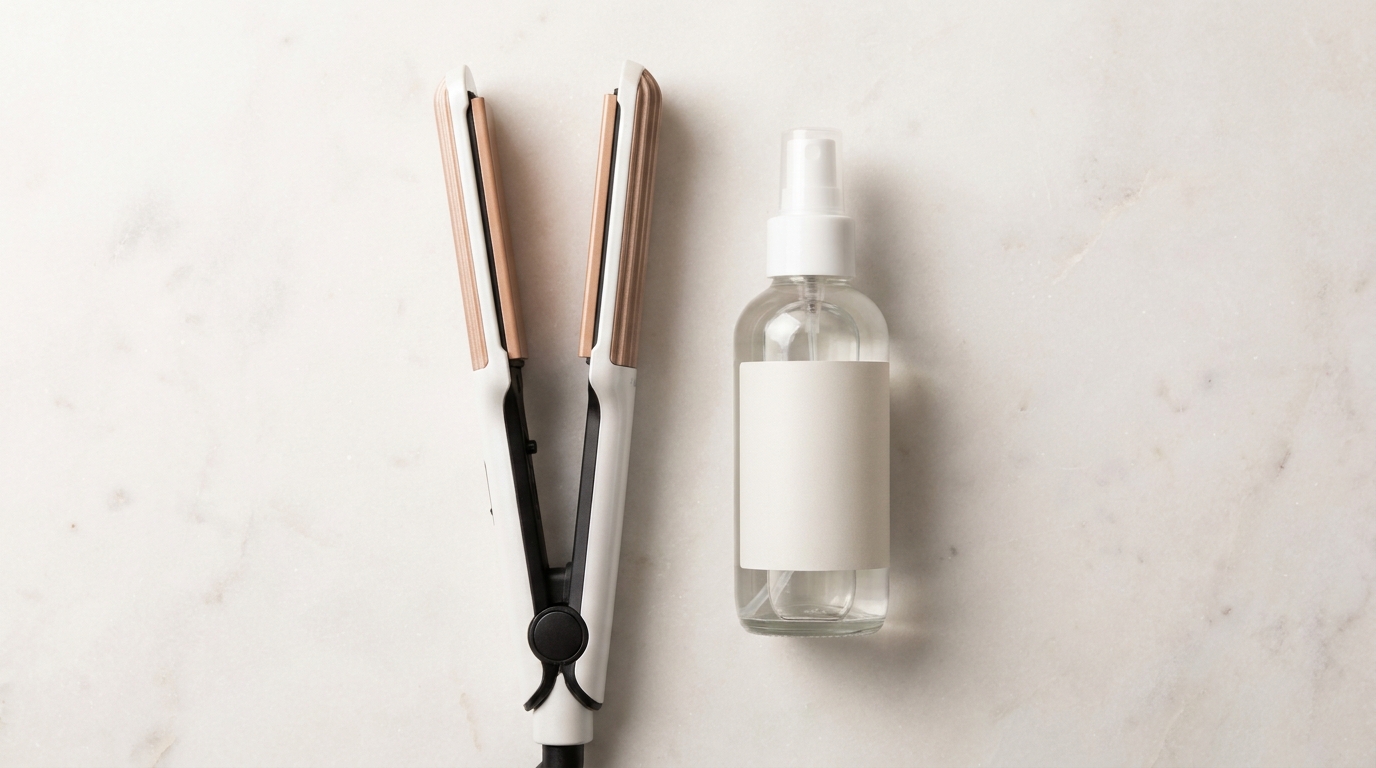
Hair Crimper Heat Protectant 2026: Safe Styling Guide
In This Guide
- Why Crimpers Need Protectant
- 5-Step Safe Crimping Routine
- Temperature Guide by Hair Type
- 3 Protectant Types Compared
- 5 Pro Tips for Damage-Free Crimping
- Frequently Asked Questions
Why Hair Crimpers Need Heat Protectant
Hair crimpers apply sustained, repeated heat to the same strand of hair because the crimp pattern requires a 3-5 second clamp on every section. That is a much longer contact time per pass than a flat iron, which typically glides in 1-2 seconds. The sustained heat exposure is exactly why crimping without protection leads to faster cuticle damage and breakage than almost any other heat style.
The science is straightforward. Hair is made of keratin protein held together by hydrogen bonds and a protective outer cuticle layer. Above 180°C, those hydrogen bonds start to break and reform under the crimp pressure. Without protectant, the cuticle scales lift and stay lifted, which is why un-protected crimped hair feels rough and looks dull. With protectant, a thin polymer film forms around each strand, distributing heat more evenly and slowing the rate at which the cuticle lifts.
The FIFN L01 hair crimper, the M01 hair straightener, and the L05 mini crimper all use ceramic plates that heat evenly across the surface. Ceramic is more forgiving than titanium because it has a smoother infrared output, but it is still 160-220°C at the plate — well above the 150°C threshold where unprotected hair starts losing moisture.

FIFN L01 Hair Crimper — A 25mm ceramic crimper plate that delivers deep zigzag texture at 160-220°C, ideal for full-head styling on medium to thick hair with a protectant base layer.

FIFN M01 Hair Straightener — A 25mm ceramic flat iron that doubles as a crimping tool on smaller sections at 160-220°C, suitable for finer hair when paired with lightweight spray protectant.

FIFN L05 Mini Hair Crimper — A 9mm mini ceramic crimper plate designed for bangs, roots, and short hair, running at 160-200°C with the same ceramic heat distribution as the larger plates.
5-Step Safe Crimping Routine
| Step | Action | Time |
|---|---|---|
| 1 | Wash with sulfate-free shampoo, towel-dry to damp | 10 min |
| 2 | Apply heat protectant spray 15cm from hair, comb through | 2 min |
| 3 | Blow-dry on medium heat until 100% dry | 5 min |
| 4 | Section hair into 4 quadrants, clip top layers up | 2 min |
| 5 | Crimp 2cm sections, 3-5 second hold, move to next | 15 min |
The total time is around 35 minutes from wash to finished style. Most of that is drying, not crimping. Once the protectant is in and the hair is fully dry, the actual crimping pass goes quickly because each section only needs one or two clamps to hold the zigzag pattern.
Temperature Guide by Hair Type
| Hair Type | Safe Temp (°F) | Safe Temp (°C) | Hold Time |
|---|---|---|---|
| Fine or chemically treated | 280–320°F | 138–160°C | 3 seconds |
| Medium or color-treated | 320–360°F | 160–180°C | 4 seconds |
| Thick or coarse | 360–400°F | 180–200°C | 5 seconds |
Going above 400°F (200°C) with a crimper is rarely necessary and almost always a mistake. The crimp pattern is a physical change in the hair shape, not a chemical change, so extra heat does not improve the look — it just dries out the strand. If your crimp is not holding at 200°C, you probably need a smaller section, not more heat.
3 Protectant Types Compared
| Type | Best For | Coverage |
|---|---|---|
| Spray (aerosol or pump) | Fine hair, all-over even coating | Light to medium |
| Cream or serum | Thick hair, focused section protection | Heavy |
| Leave-in spray + finishing oil | Color-treated or heat-damaged hair | Medium, layered |
For most users, a mid-weight spray protectant applied to 80% dry hair, followed by a blow-dry, then a second light mist on fully dry hair before crimping, gives the best results. The first application protects during the blow-dry, and the second creates a fresh polymer film right before the hot plates touch down.
Key Facts to Know
Crimping temperatures above 200°C without protectant cause 30-50% more cuticle damage than protected hair at the same temperature. The cuticle layer is most vulnerable in the first 2 seconds of plate contact, which is why pre-application of protectant beats post-application. Sectioning hair into 2cm chunks before crimping is more important than temperature — large sections force you to clamp longer, multiplying heat exposure. Ceramic plates like the L01, M01, and L05 distribute heat evenly, but the plate edges can run 5-10°C hotter than the center, so clamping near the edges of the plate causes more damage than clamping in the middle.
5 Pro Tips for Damage-Free Crimping
- Apply protectant twice: Once on 80% dry hair before blow-drying, then again on fully dry hair right before crimping. The double layer provides backup if the first film gets rubbed off during brushing.
- Never crimp soaking wet hair: The water turns to steam inside the cuticle and causes bubbling damage that no protectant can prevent. Wait until hair is 100% dry.
- Clamp in the middle of the plate: The center of the L01, M01, and L05 plates runs 5-10°C cooler than the edges. Aim for the middle, not the tips.
- Wait 5 seconds between sections: Letting the section cool fully after crimping sets the pattern and reduces the total number of passes you need on each chunk.
- Finish with a cool shot: A blast of cool air from your blow dryer on the lowest setting locks the crimp in place and helps the protectant polymer film set.
Do's and Don'ts
| ✅ Do | ❌ Don't |
|---|---|
| Apply protectant to fully dry hair before each crimp pass | Re-crimp the same section three or more times to fix a weak pattern |
| Use 2cm sections for crisp, defined zigzag | Clamp large 5cm sections hoping to save time |
| Let each section cool 5 seconds before brushing | Brush through crimped hair while still warm |
| Clean your crimper plates monthly to prevent residue burn | Skip cleaning for 6+ months and crimp on built-up product |
Frequently Asked Questions
Q1: Can I use a hair crimper without heat protectant at all?
Answer: Technically yes, the tool will still work, but the long-term cost is real cuticle damage. Independent trichology studies show unprotected hair loses 25-35% of its moisture after a single 200°C crimping session. With protectant, that drops to 8-12%. If you crimp weekly without protectant, expect noticeable roughness and split ends within 8-10 weeks.
Q2: Which heat protectant type works best for the L01 vs the L05?
Answer: The L01's 25mm plates are wider, so a cream or serum protectant works well because you can spread it across the broader surface area. The L05's 9mm mini plates are narrow, so a spray protectant is easier to apply without over-saturating small sections. The M01 (25mm straightener) follows the same logic as the L01 — cream or serum for thick hair, spray for fine hair.
Q3: How long should I let protectant dry before crimping?
Answer: Most protectant sprays and creams need 60-90 seconds to fully absorb into the hair shaft and form the protective polymer film. Crimping before the film sets means the heat hits the protectant itself before it can transfer to the hair, which reduces effectiveness by roughly 30%. A simple test: if the hair still feels wet or tacky, wait another 30 seconds.
Q4: Does temperature matter more than protectant for damage?
Answer: Temperature and protectant work together. Crimping at 220°C with protectant is roughly equivalent in damage to crimping at 180°C without protectant. The safest combination is 160-180°C with a quality protectant applied twice. Going above 200°C even with protectant is risky because the polymer film starts to break down at 210°C.
Q5: Can I use coconut oil as a heat protectant for crimping?
Answer: Coconut oil has a smoke point of 177°C, which is below the safe crimping range of 180-200°C. Once the oil hits the plates, it smokes and can deposit burnt residue on the ceramic surface, which then transfers to your hair and causes more damage than using no protectant at all. Use a proper formulated heat protectant, not kitchen oils.
Ready for Damage-Free Crimped Hair?
Shop FIFN Crimpers →Hair Crimper for Glueless Wigs 2026: Wig Texture
Hair Crimper for Blonde Hair 2026: Color-Safe Guide
Related Posts

Hair Crimper Y2K 2026: Step-by-Step Throwback Tutorial

Boho Crimped Hair for Outdoor Weekends: Soft Texture Guide

Hair Crimper for Bedhead Waves 2026: Texture Guide

Hair Crimper for Long-Layered Hair 2026

Hair Crimper for Teachers: Soft Root Volume Guide

Hair Crimper for High School Reunion 2026

Hair Crimper for Choir Performances: Stage-Ready Volume Guide


